Main page

Showing posts with label USA. Show all posts

Saturday, 6 June 2015

Hay Stack Café

The Hay Stack café outside Esther Klein Gallery in Philadelphia 

The  firm was invited by the Esther Klein Gallery in Philadelphia to make a proposal for the exhibition The Usable Earth, where the firm was asked to explore the role of ecology in society. The exhibition will open in Philadelphia on June 12, 2015 and run through July 24 and is curated by Kristen Neville Taylor.

We proposed a temporary structure to be erected in front of the Esther Klein Gallery, a structure that is truly unique and an eccentric fusion of a miniature farm and a café, 
stacked as a pile of hay that is impaled on wooden poles that holds up the structure.
Goats, hens and crops lives and grows at different levels of the structure and the café/kiosk is integrated at the base and will have a breakfast menu based on the products of the mini-farm; goat milk, cheese, eggs and vegetables, making the dishes perhaps the most locally produced food that has ever existed in a big city.
Haybales are placed around the small plaza where people can sit and eat omelet or just watch the goats climb and eat from the structure accompanied by the clucking melodies from the hens.
The Hay Stack Cafe will be a true clash in the city landscape, a slice of another time, place and nature. 
A miniature world in itself, a stacked ecosystem.


Section and structural diagram
Structure
1. Wooden poles are driven into the ground as the primary structure.
Hay are then impaled on the poles to a certain level, becoming the secondary structure. This is a traditional method to dry hay.
2. Stabilizing rafters are then connected with the primary poles. Horizontal joists are placed as a mezzanine floor for the hen coop.
3. More hay is then added. More stabilizing rafters and a second floor are added for the goats.
4. More poles are driven into the hay for stairs and for planting crops.
5. The structure is refined further with a clay plaster on the kiosk level, and excavation of hay for the kiosk and for the animals.
Each and every material will be something that is found locally. The hay can be taken from a local farm, the mud for the plaster from amlocal river, the wooden poles from a lumber mill close by and so on.


Hay Stack café at night
Hay Stack café close up


Monday, 3 December 2012

Chop Stick

Commission for the Indianapolis Museum of Art to create an innovative concession stand for the 100 Acres: The Virginia B. Fairbanks Art & Nature Park.

The design is based on the universal notion that you need to sacrifice something in order to make something new. Every product is a compound of different pieces of nature, whether it is a cell phone, a car, a stone floor or a wood board; they have all been harvested in one way or another. This project is about trying to harvest something as gently as possible so that the source of what we harvest is displayed in a pure, pedagogic and respectful way—respectful to both the source itself and to everyone visiting the building. 

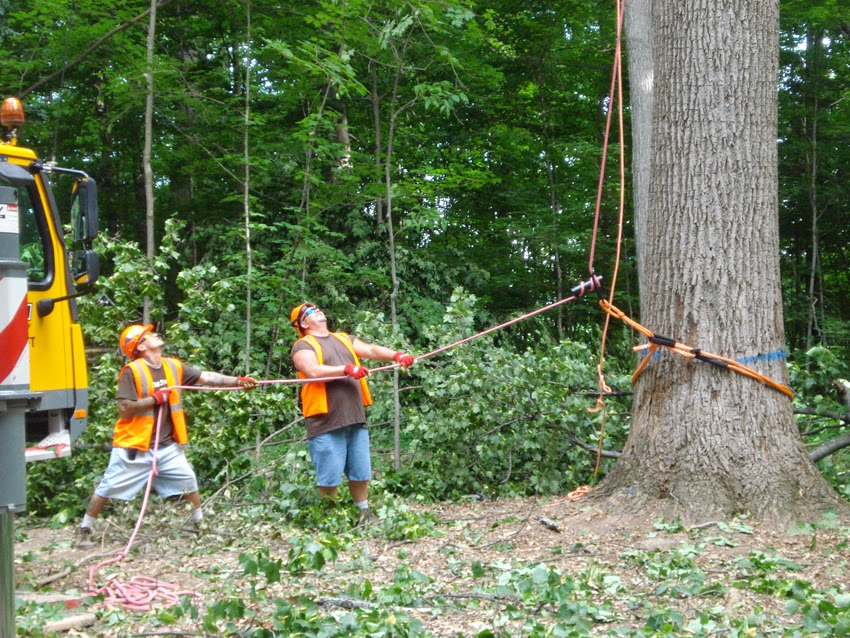
The raw material we selected is a 100-foot yellow poplar tree, the state tree of Indiana, known for its beauty, respectable size, and good properties as hardwood. We found a great specimen standing in a patch of forest outside of Anderson, Indiana. The goal was to make the best out of this specific poplar tree, from taking it down and through the whole process of transforming it into a useful building that is now part of one of the finest art parks in the United States. As the project proceeded, we continued to be surprised by all of the marvelous features that where revealed in refining a tree into a building; both in the level of craftsmanship and knowledge of woodworkers and arborists, and also of the tree itself.

The tree was then transported to the park site, where it became the suspended horizontal beam of this new structure, which is almost entirely made out of the tree itself. The tree’s bark was removed to prevent it from falling on bystanders, a process that occurs naturally as the moisture content in the wood drops, causing the tree to shrink and the bark to lose its grip. Craftsmen loosen entire cylinders of bark from the trunk that are then flattened and cut into a standard shingle length. The shingles was carefully stacked and placed under pressure to avoid curling. The stacks was then kiln dried to the proper moisture content, sterilized, and kept in climate-controlled storage until they where ready for use. Bark shingles are very durable, long lasting (up to 80 years), and maintenance free.

After debarking, pieces of wood are extracted from the suspended tree and used for each of the components of the concession stand; structural support of the construction, pillars and studs for the kiosk, swings under the tree for kids, chairs and tables to be placed under the tree’s crown, from which special fixtures made out of bark pieces will hang. Many school children visit 100 Acres, and we had those kids in mind when we decided to hang swings from the tree. On a smaller scale, we explored ways to use other parts of the tree in the concession stand, including pressed leaves and flowers that were taken from the tree and that became ornaments in the front glass of the kiosk.
We also made Yellow Poplar syrup that was extracted from the bark of the tree and that will be sold in the kiosk, thus meaning that you could actually eat a part of the building


Chop Stick before choped down


Chop Stick in the air

Flowers from Chop Stick

From inside the kiosk

the debarking of Chop Stick

the transportation of Chop Stick

the transportation of Chop Stick


Master diagram showing the concept and the process

Facades

Diagram showing the cuts and where the different pieces of wood is used